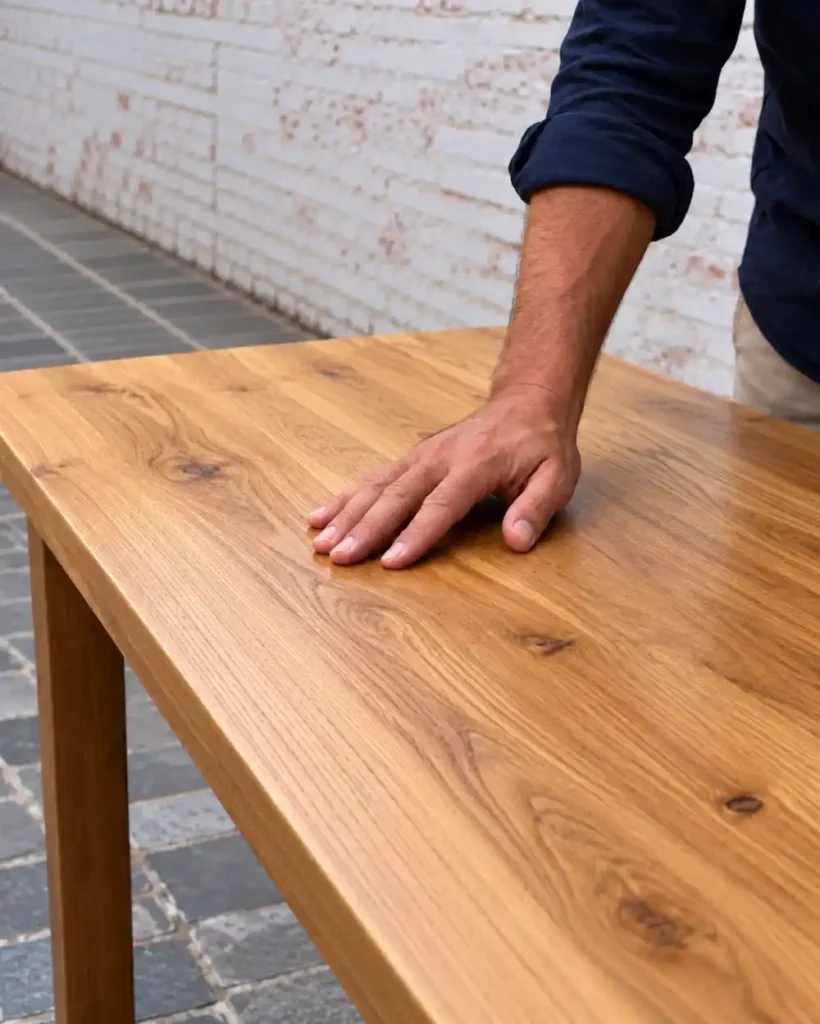
A solid wood table that darkens under a drop of water has lost its oil and from then on every glass leaves a mark. Oiling it takes an hour of work and two days of patience. You need soap flakes, 240-grit sandpaper on a block, hardwax oil or boiled linseed oil, and three lint-free cotton cloths.
wash the top with mild soap
Dissolve a teaspoon of soap flakes in a litre of warm water. Wipe the whole top with a well-wrung cloth, working along the grain, then go over it again with clean water. Dry it with a towel and leave the table for at least four hours; oil will not bond to damp wood.
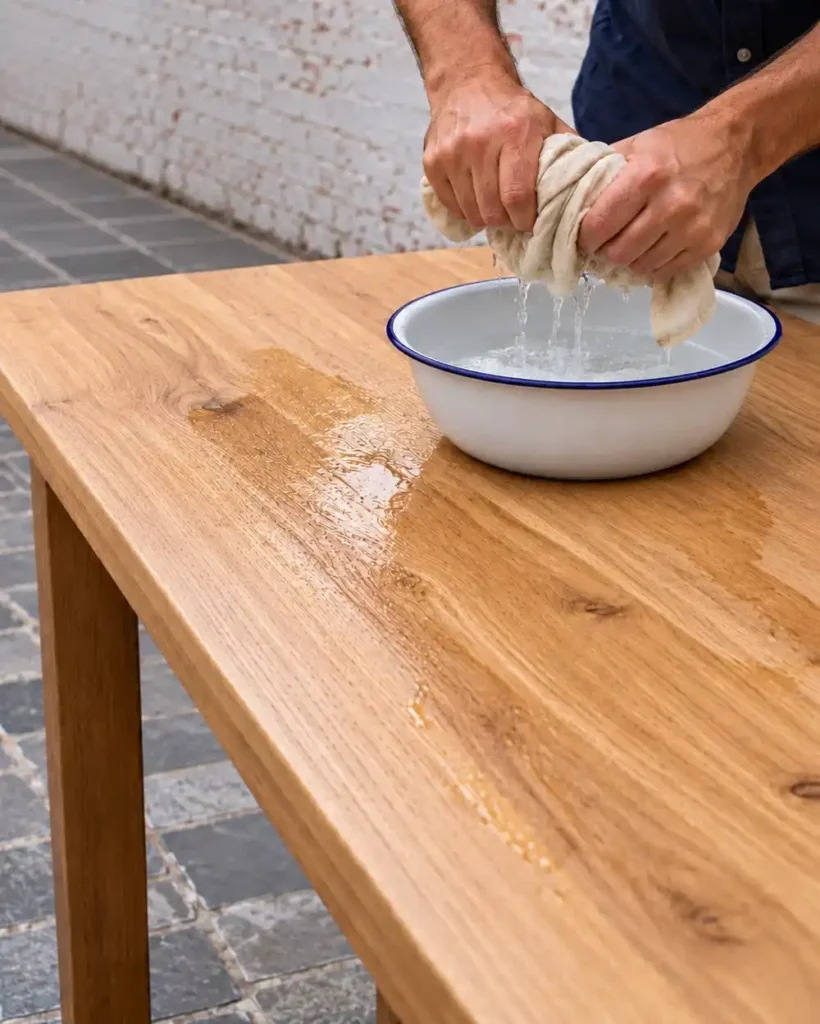
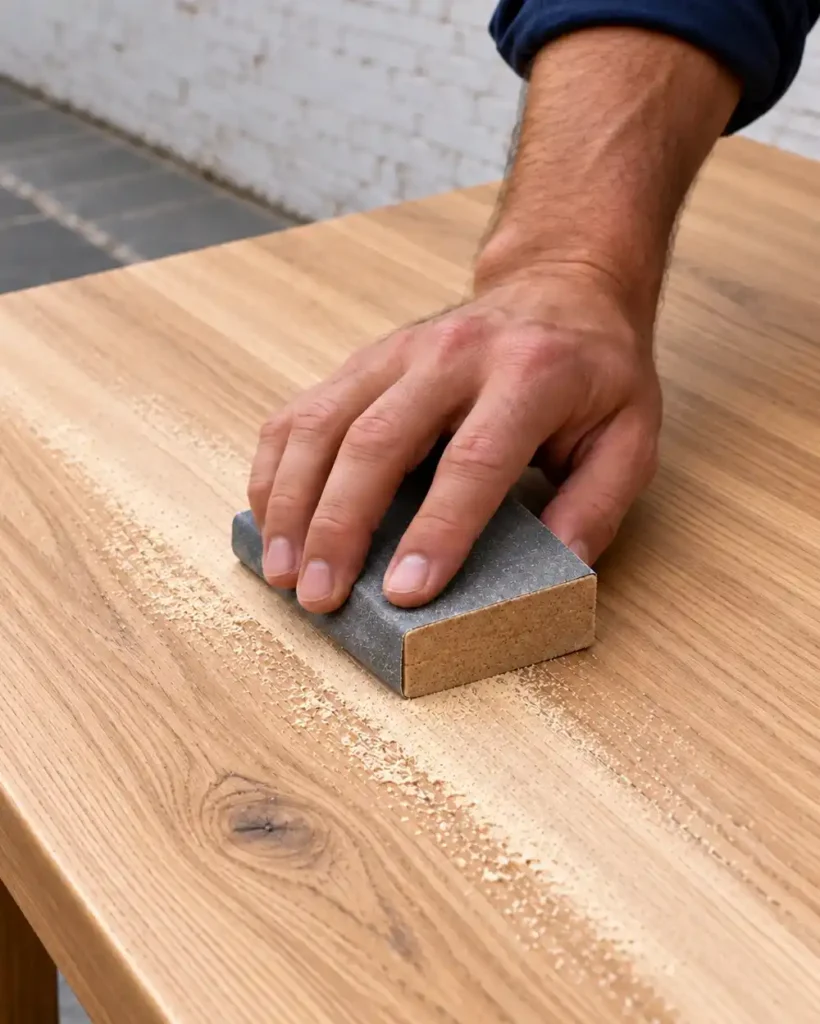
sand lightly along the grain
Run 240-grit paper on a block along the grain, never across it, with light, even strokes. Washing raises the fibres, and this takes them back down along with any rough patches and faint water rings. Vacuum the dust and wipe the top with a dry cloth; your palm should come away clean.
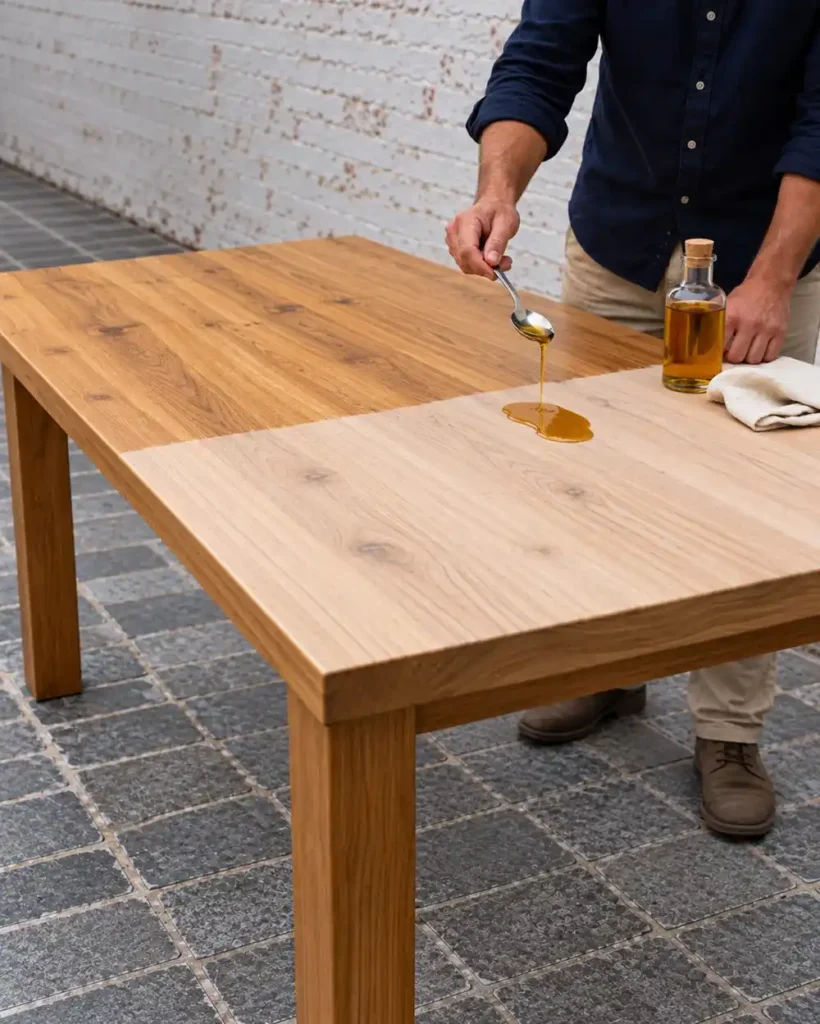
work in a thin coat of oil
Pour about a tablespoon of oil onto one end of the top and spread it with a folded cloth, following the grain. Work in sections of half a metre until the surface and edges look evenly wet, around 60 ml for a six-seat table. Leave it for fifteen minutes so the oil can soak in.
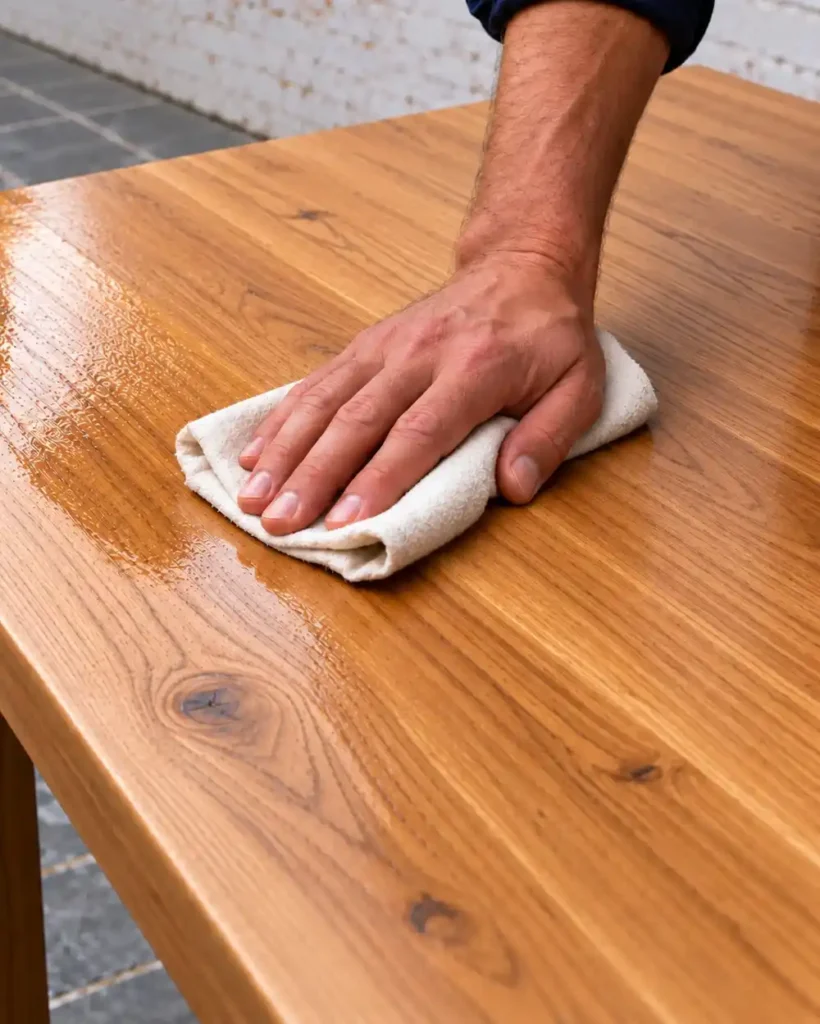
wipe away every trace of excess
Rub the top firmly with a clean cloth along the grain until it feels dry to the touch, not tacky. Oil left on the surface turns sticky and dull. Afterwards, lay the used cloths flat outdoors to dry or keep them in a sealed jar of water: oily rags can catch fire on their own.
let it dry, then add a second coat
Leave the table for 24 hours somewhere dry and shaded, between 15 and 25°C. Then sand very lightly with worn 240-grit paper, wipe off the dust and repeat the oil and wipe-off steps. After the second coat, allow another 24 hours before light use and a full week before hot dishes or spills.
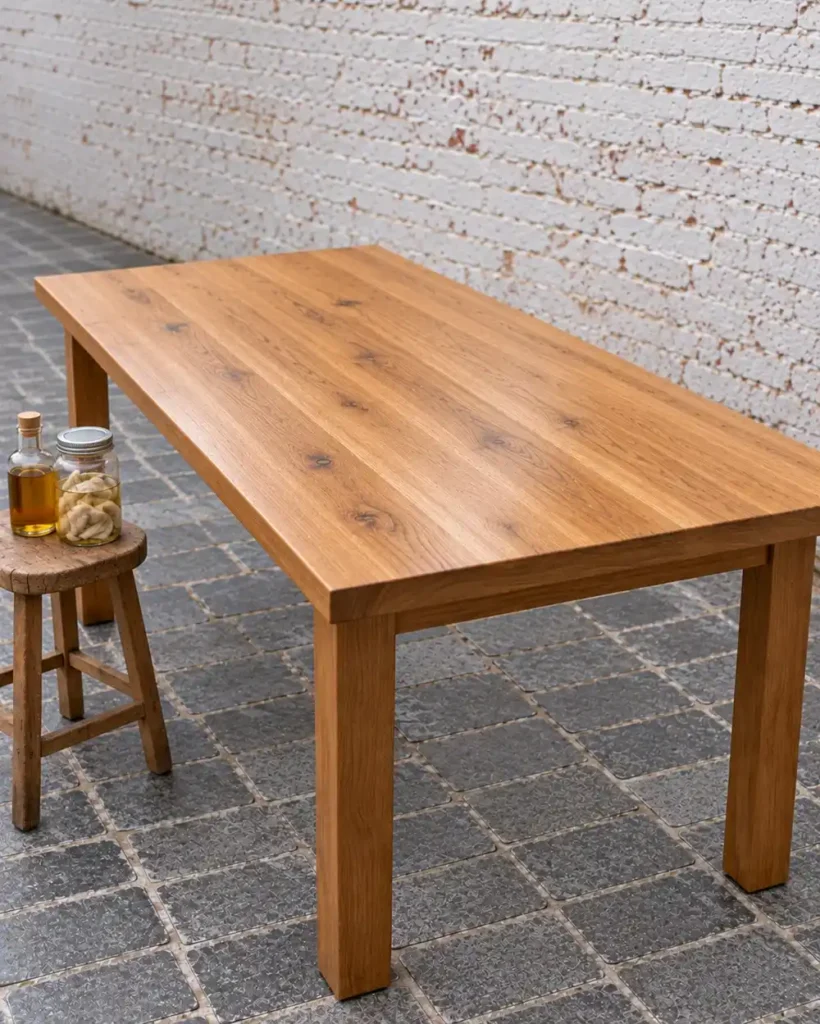
Done properly, a drop of water will bead on the top again, and the grain will look deeper than it has in years.