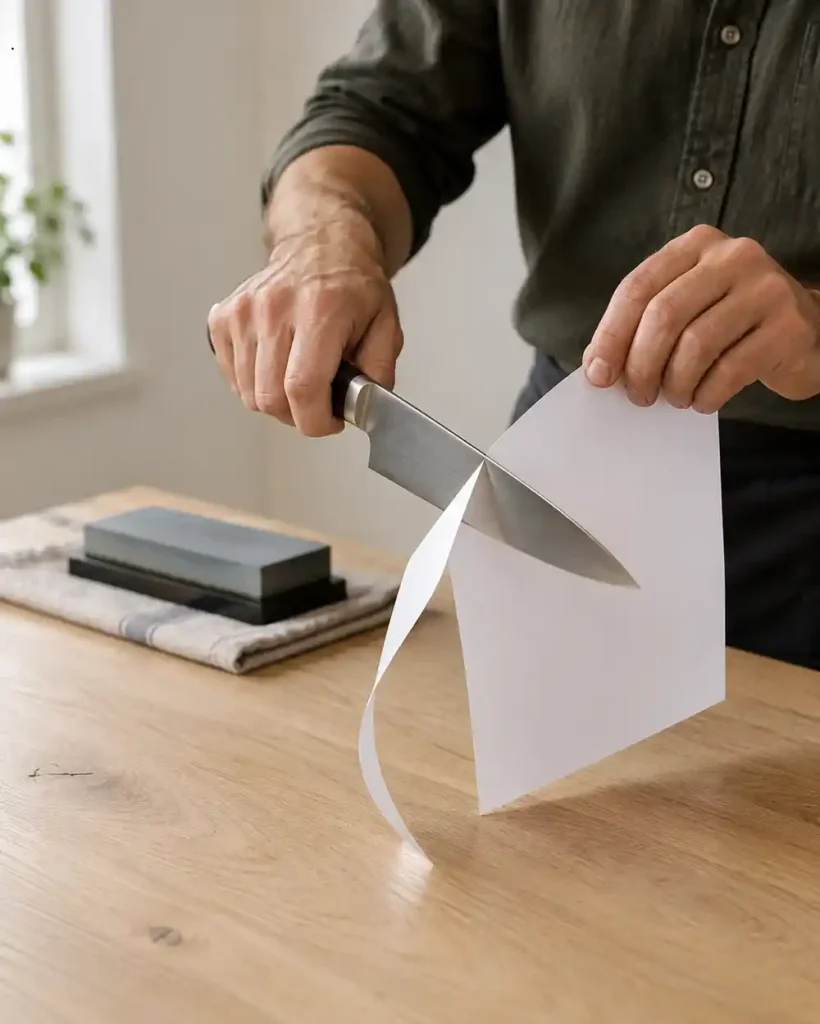
A sharp knife is safer than a blunt one: it follows the line you guide it along instead of skidding off a tomato skin. Twenty minutes on a whetstone restores an edge no pull-through sharpener can match. You need a combination water stone of 1000 and 6000 grit, a damp tea towel and the knife.
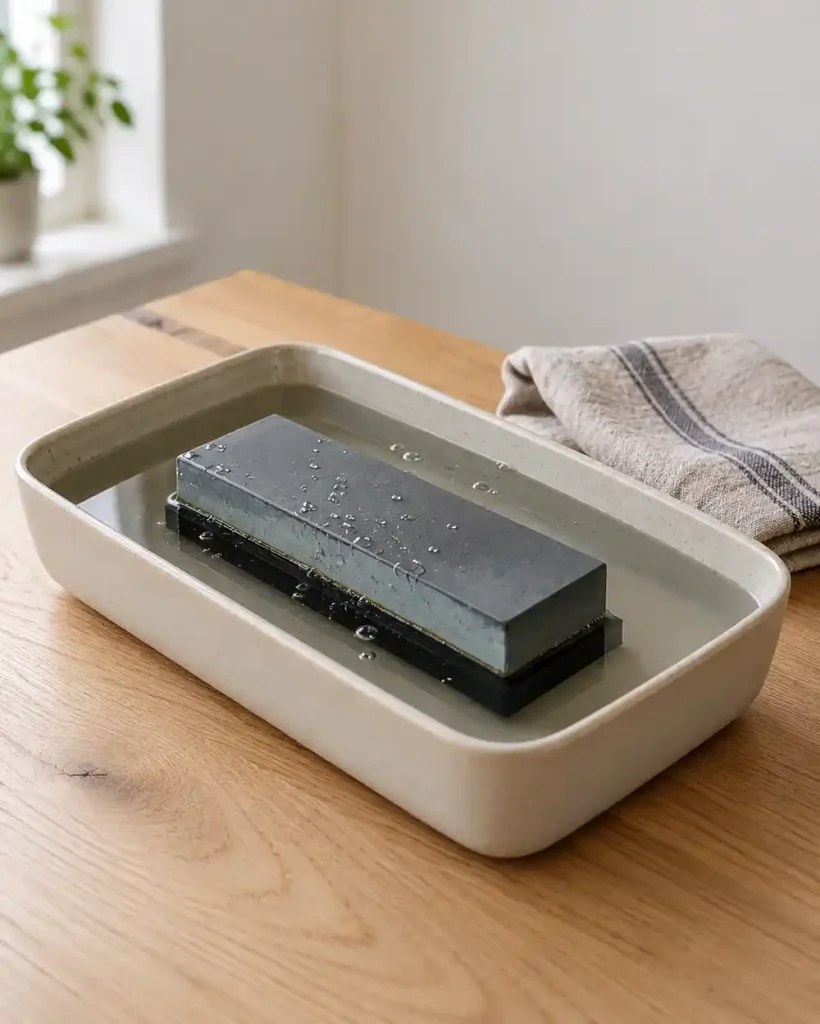
soak the stone first
Submerge the stone in cold water for 10 to 15 minutes, until no more air bubbles rise. Fold the damp tea towel on the worktop so the stone cannot slide. Set the stone on top, coarse 1000 side up, with one short end pointing towards you.
find the angle and hold it
Hold the handle in your dominant hand, edge facing away, and lay the blade flat on the stone. Raise the spine to 15 degrees for a Japanese knife or 20 for a European one. To judge it, halve a right angle, halve it again, then drop a touch for 20, a little more for 15. Lock your wrist there.
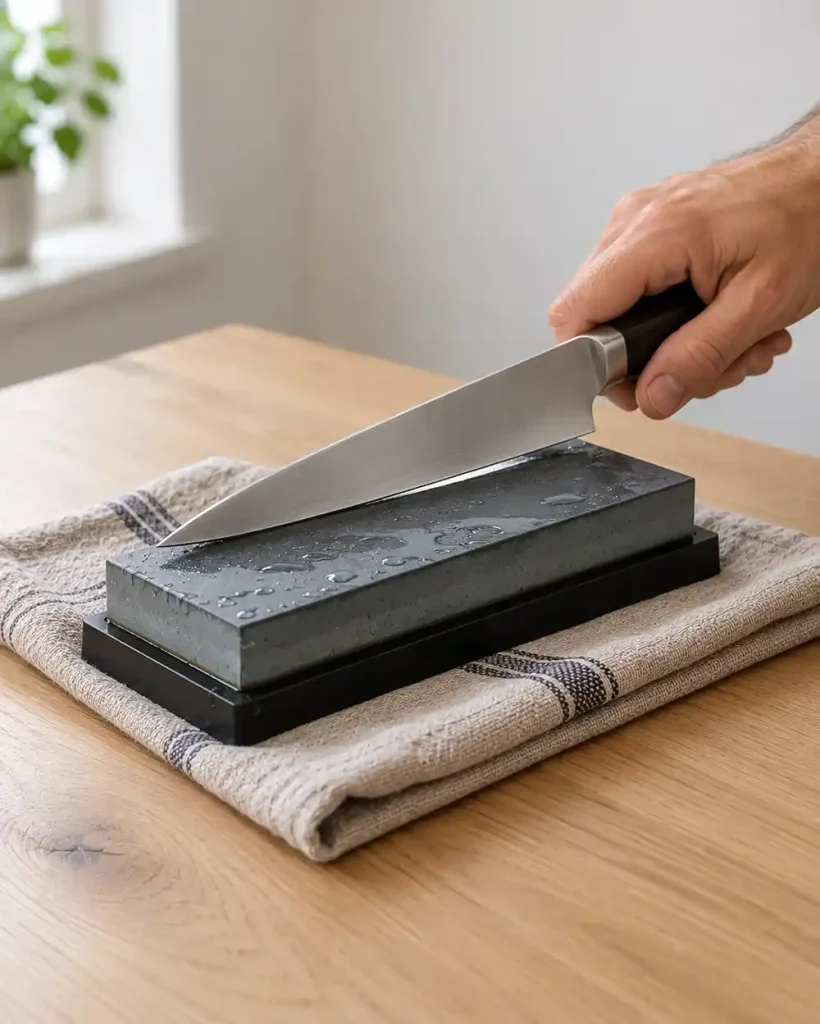
raise a burr on the coarse side
Press two fingertips on the flat of the blade near the edge. Push the edge across the stone, sweeping from heel to tip in one stroke. Every 10 strokes, draw your thumb over the other side, away from the edge; when a faint rough lip runs the whole length, you have a burr. Repeat on the second side.
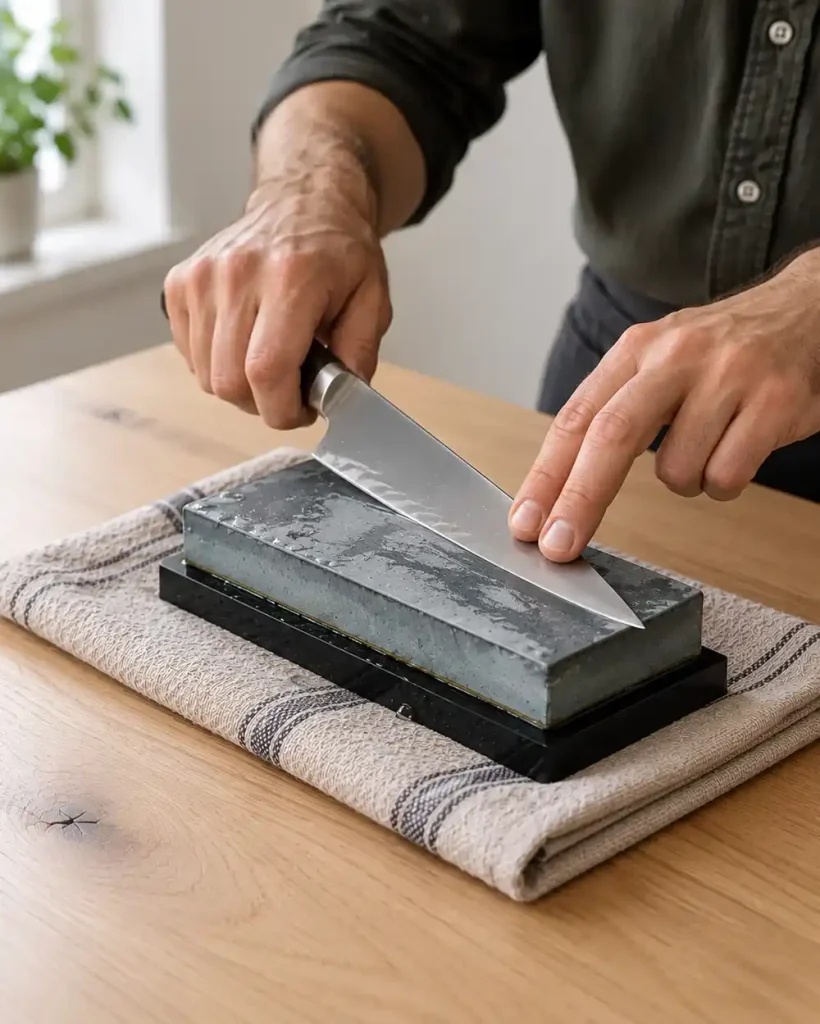
finish on the fine side
Turn the stone to the 6000 side and wet the surface. Keep the same angle at half the pressure, alternating sides with single strokes, 10 per side. Then draw the edge spine first across a leather belt or folded newspaper, 5 times per side, to strip the last of the burr.
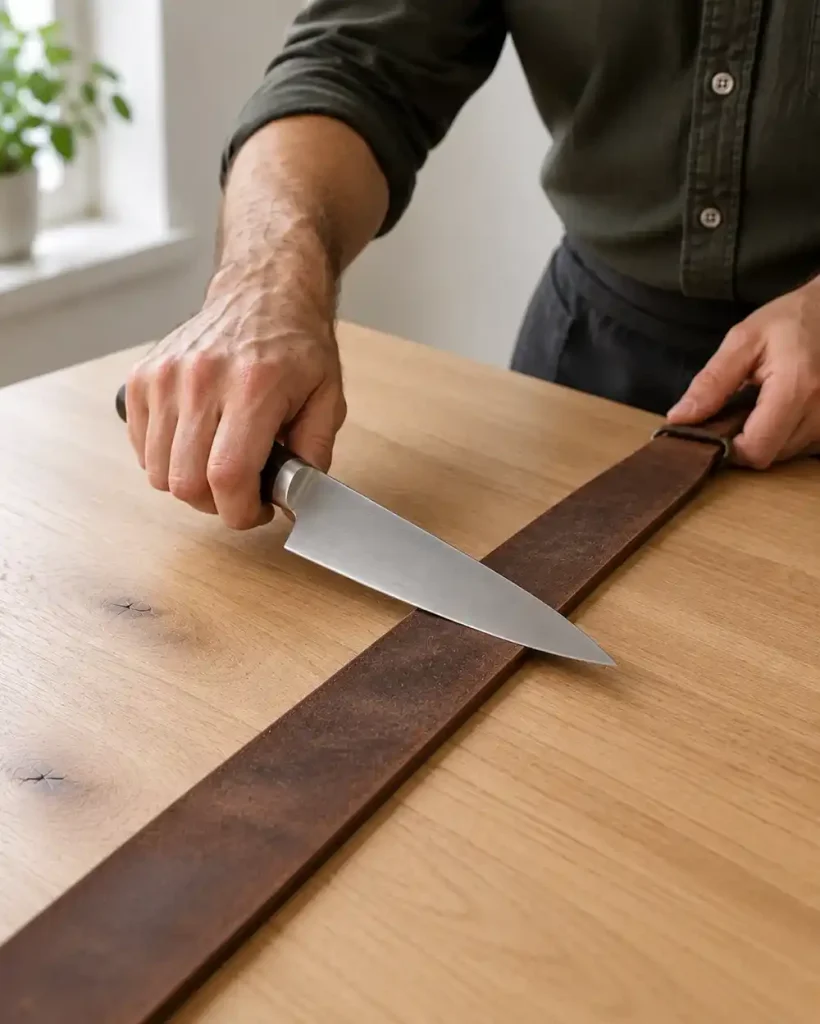
The usual mistake is a wrist that rocks mid-stroke: the angle shifts, the edge rounds over and the knife stays dull however long you work.