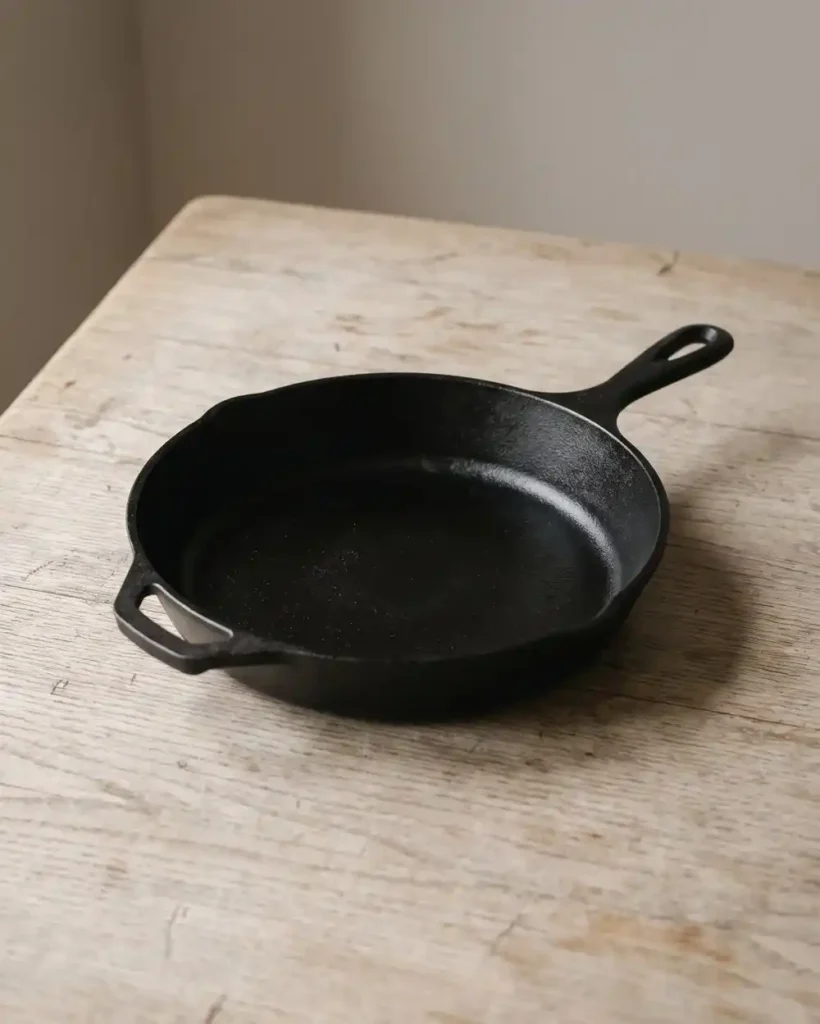
A cast-iron pan is a single piece of grey iron, poured into a sand mould and left to cool. Body and handle are one casting: no rivets, no coating, no plastic. A 26-centimetre pan weighs about two and a half kilos, and you feel it in your wrist as you lift it.
That simplicity is why it lasts. There is nothing to peel, loosen or crack. The black surface is seasoning: thin layers of oil baked into a hard, faintly glossy skin that thickens each time you cook with fat. A pan that has fried a thousand eggs is smoother than the day it left the foundry. Its weight holds heat, so a cold steak barely checks it. Rust lives only on the surface; scrub it off and the pan starts again.
how to keep it black
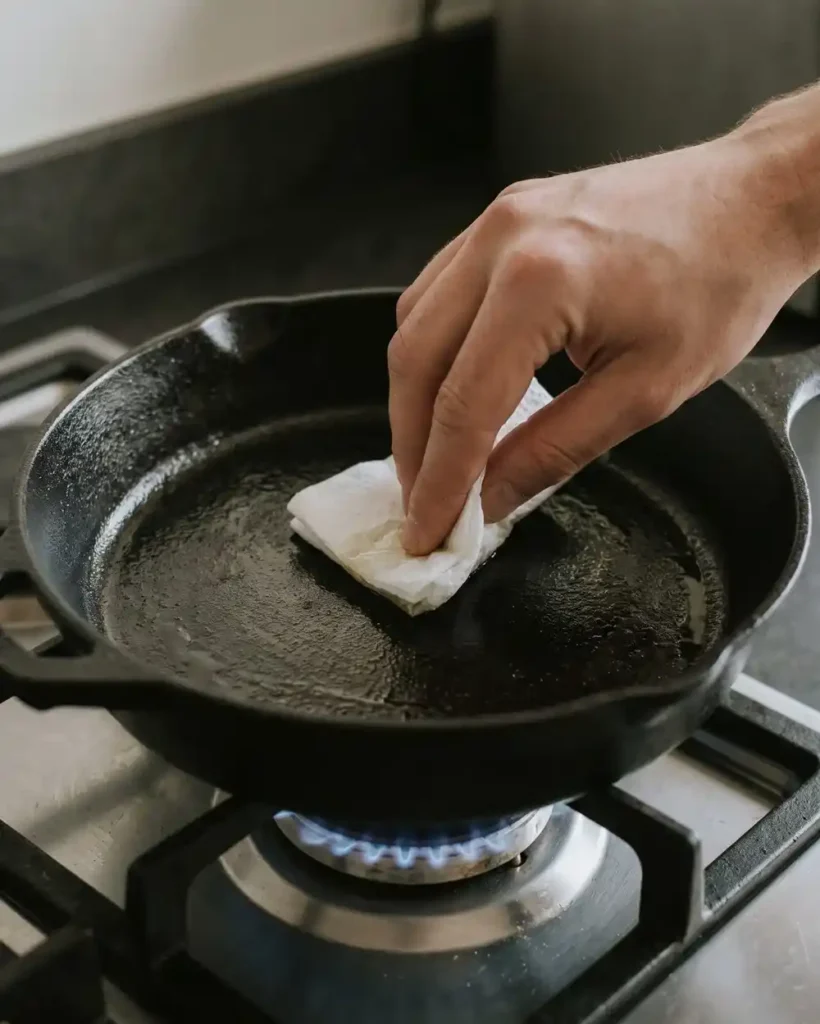
Rinse it while still warm, with hot water and a stiff brush. A drop of washing-up liquid does no harm; soaking and the dishwasher do. Dry it over a low flame until the last bead of water goes, then wipe in a little sunflower oil with kitchen paper until the surface looks almost dry. Keep slow tomato sauces and vinegar for another pan.
Choose one with a flat base that does not rock, a single casting and a short helper handle opposite the long one. A 26-centimetre pan covers almost everything you will cook. Tonight, after cooking, dry the pan on the hob and give it three drops of oil.